

Yogakshem – Centre for Policy, Governance and Impact

At Indira University, Pune, Yogakshem stands as a transformative initiative designed to shape responsible, informed, and action-oriented leaders for a rapidly evolving India. Rooted in the philosophy of well-being, stewardship, and societal responsibility, the Centre bridges the gap between classroom learning and real-world impact.

Yogakshem is not just a centre—it is a dynamic ecosystem where students, faculty, policymakers, and practitioners come together to engage with real challenges in governance, public policy, and social development. It is built on a strong belief that education must go beyond knowledge to inspire action, leadership, and service for the greater good.

What makes Yogakshem unique is its practice-first approach. Every student is immersed in experiential learning through policy engagement, grassroots exposure, and community-based projects. From village adoption programmes and NGO collaborations to student-led initiatives like The Future Club and Impact Fest, Yogakshem ensures that learning is deeply connected to society.

The Centre also serves as a hub for research, policy dialogue, and capacity building—supporting NGOs, corporates, and government bodies while empowering faculty and students to contribute meaningfully to national development.

With Yogakshem, Indira University is redefining higher education—nurturing not just graduates, but changemakers equipped to lead with purpose, empathy, and impact.
From the Chair’s Desk

Sanjay Kumar
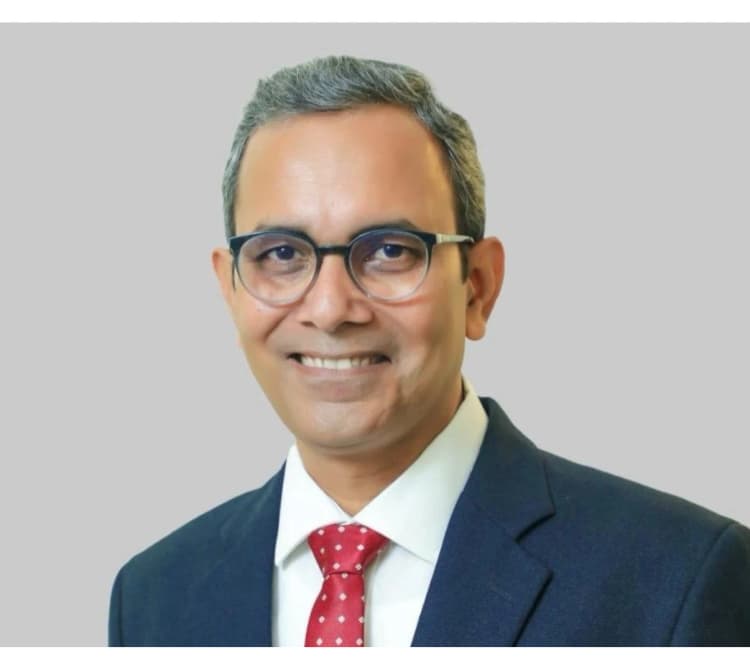
Dr. Sanjay Kumar

Chair, Yogakshem — Centre for Policy, Governance and Impact
Distinguished Professor, Indira University, Pune

quotationquotation

From the Chair’s Desk

quotationquotation

My journey towards Yogakshem has been shaped by a rare combination of experiences that few institutions bring together under one roof. Working with SEWA took me deep into the lives of rural and urban communities across Uttarakhand, Gujarat, Rajasthan, Madhya Pradesh, Uttar Pradesh, Bihar, West Bengal, Delhi, and beyond — where I learned that policy, however well-crafted, means little unless it is understood, owned, and driven by people on the ground. That grounding in grassroots reality was then profoundly enriched by my time at Harvard Kennedy School, where I immersed myself in the worlds of public policy, leadership, and administration — learning from some of the finest minds working on governance and change globally. Later, as the head of Harvard University’s centre in India — The Lakshmi Mittal & Family South Asia Institute — I had the rare privilege of sitting at the intersection of world-class academic inquiry and the complex, urgent realities of South Asia. It was this combination — of Bharat and Harvard, of village and seminar room, of lived experience and rigorous learning — that made it increasingly clear to me that what India truly needs is not more institutions that separate thinking from doing, but spaces that deliberately and courageously bring them together. That realisation led me to think about creating a centre of excellence that could offer exactly this to students and practitioners alike. And when I began looking for a home for this vision, I found it at Indira University.

My journey towards Yogakshem has been shaped by a rare combination of experiences that few institutions bring together under one roof. Working with SEWA took me deep into the lives of rural and urban communities across Uttarakhand, Gujarat, Rajasthan, Madhya Pradesh, Uttar Pradesh, Bihar, West Bengal, Delhi, and beyond — where I learned that policy, however well-crafted, means little unless it is understood, owned, and driven by people on the ground. That grounding in grassroots reality was then profoundly enriched by my time at Harvard Kennedy School, where I immersed myself in the worlds of public policy, leadership, and administration — learning from some of the finest minds working on governance and change globally. Later, as the head of Harvard University’s centre in India — The Lakshmi Mittal & Family South Asia Institute — I had the rare privilege of sitting at the intersection of world-class academic inquiry and the complex, urgent realities of South Asia. It was this combination — of Bharat and Harvard, of village and seminar room, of lived experience and rigorous learning — that made it increasingly clear to me that what India truly needs is not more institutions that separate thinking from doing, but spaces that deliberately and courageously bring them together. That realisation led me to think about creating a centre of excellence that could offer exactly this to students and practitioners alike. And when I began looking for a home for this vision, I found it at Indira University.