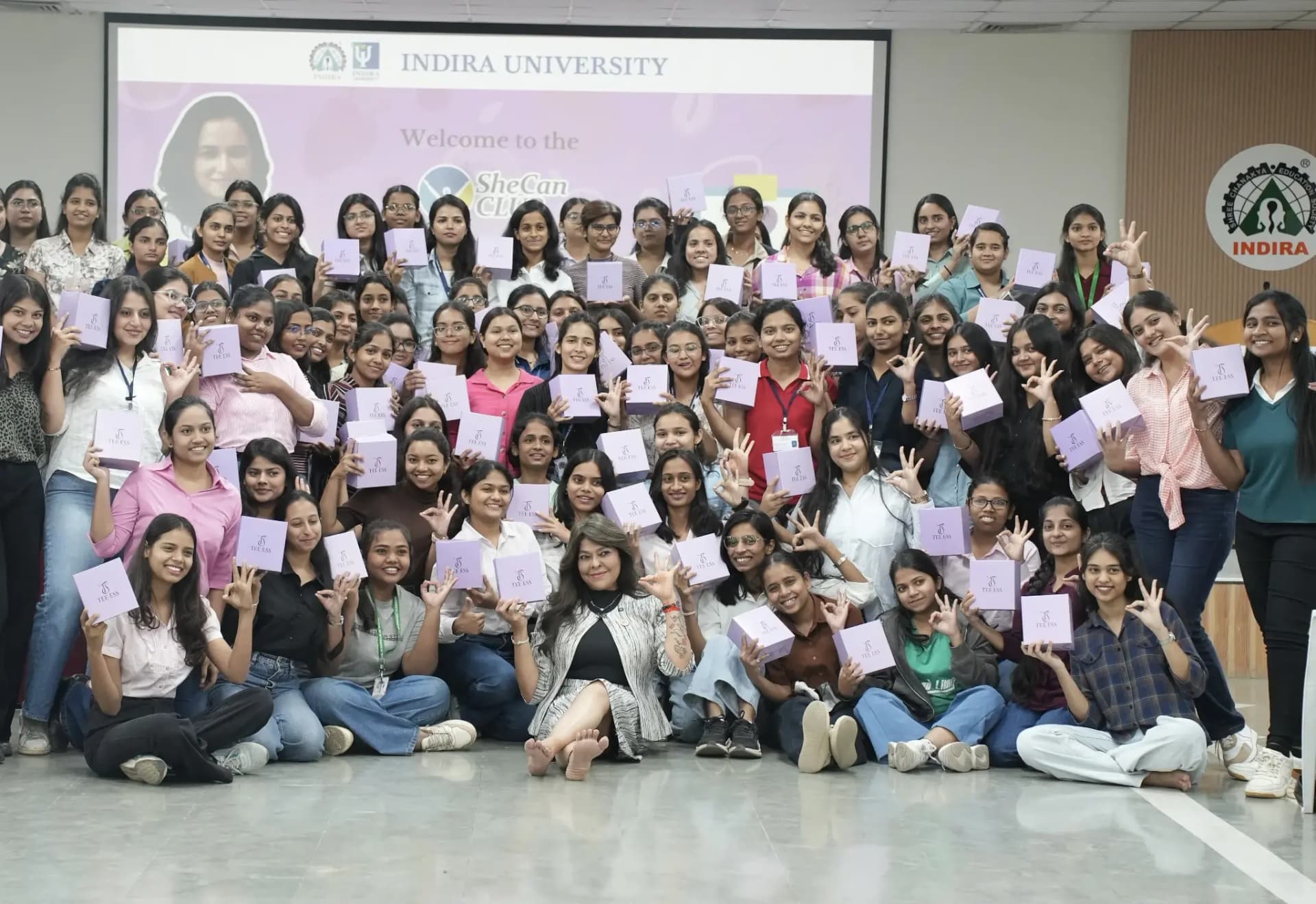
SheCan Club 3rd Session - The Role of Diet in Women's Health and Well-being
The third session of the SheCan Club focused on a vital aspect of women’s lives — The Role of Diet in Women’s Health and Well-being. The session was led by Ms. Ghazal Furniturewala, a renowned nutritionist, who shared valuable insights on building mindful eating habits and maintaining overall wellness.
Ms. Ghazal emphasized the importance of avoiding overeating during dinner and encouraged planning healthy snacks between 4:00 p.m. and 6:00 p.m., the time when hunger usually strikes. She suggested simple yet nourishing options like bananas, poha, upma, chivda, homemade laddus, or dry fruits. She also reminded everyone that it’s perfectly fine to indulge in a vada pav or tiramisu, but only once a week. She warned against consuming ultra-processed foods, explaining how they contain addictive molecules that can harm long-term health. She cautioned participants to avoid “camouflaged junk” like instant noodles or packaged snacks.
Beyond diet, Ms. Furniturewala emphasized the importance of exercise. She advised doing six Surya Namaskars daily (three on each side) along with strength or resistance training to improve insulin sensitivity and maintain bone density and muscle mass. She talked about eating mindfully, staying active throughout the day, sleeping on time, and disconnecting from screens, especially before bedtime and in the washroom.
After the talk, a Q&A session began. Girls asked for dietary advice for PCOD and PCOS. Ms. Ghazal recommended exercise, strength training, quality sleep, and eating millets like rajgira and ragi, along with pulses and sprouts. Dr. Tarita Shankar, President Designate – Indira University and Chairperson & Chief Mentor – Indira Group of Institutions, listened attentively before asking whether a warm-up was needed prior to practising Surya Namaskar. Ms. Ghazal replied that while a warm-up is not strictly necessary, breathing exercises can be helpful. She further emphasized that thyroid patients should prioritise rest and recovery, discourage “volume eating,” and focus instead on eating ‘Ghar ka khana’ (home-cooked food) and making sustainable choices.
At the close of the Q&A, Dr. Tarita warmly felicitated Ghazal, then took the stage to address the SheCan students. She described the simple, balanced Indian diet she follows, and underscored the importance of mental health, reminding everyone that mental stress often takes a toll on the body as well as the mind. “Use what’s available,” she advised. “Eat a good breakfast. Don’t overthink things — be natural and happy.” She encouraged maintaining balance in life by sleeping early — ideally between 9 and 11 pm.
Dr. Tarita recommended easy nourishing habits for students living in PGs and hostels. She asked them to soak almonds overnight and eat them in the morning. She also suggested that they should make a flaxseed powder and incorporate it into their meals. She established the importance of eating ghee for women. Her broader message: “Enjoy life, eat plenty — but in balance.”
She urged students to wake up with purpose by planning their meals, deciding what they’ll wear, and acting without delay. She encouraged them to address whatever they can today so that their minds are at peace. The holistic message – integrating mindful eating, mental well-being, and purposeful living formed the core of her inspiring address.