M. Pharm – Pharmaceutical Quality Assurance
Shape the future of global health, master complex regulatory frameworks, and become the force behind trusted, high-quality medicines with an M.Pharm in Pharmaceutical Quality Assurance at Indira University!
Study Mode
Full Time
Duration
2 Years
Commencement Month
July 2026
Assessment
Semester
Location
Indira University, Tathawade , Pune
Overview
Indira University’s School of Pharmacy offers an M.Pharm program in Pharmaceutical Quality Assurance. In this postgraduate program, students gain in-depth knowledge and develop skills in Pharmaceutical Validation, Pharmaceutical Analytical Techniques, Quality Assurance, Quality Control, and Quality Management system. The extensive syllabus and effective teaching methodology help students acquire the expertise and competencies required by QA professionals in the healthcare sector.
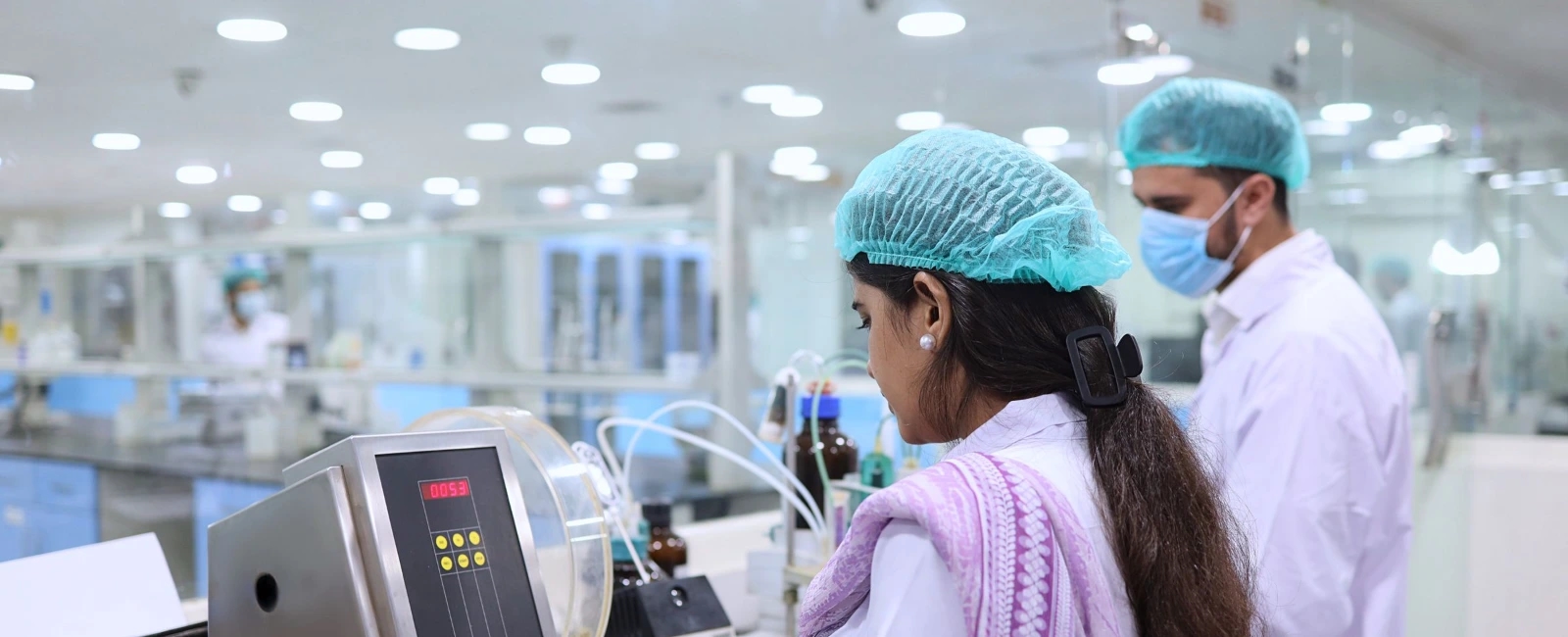
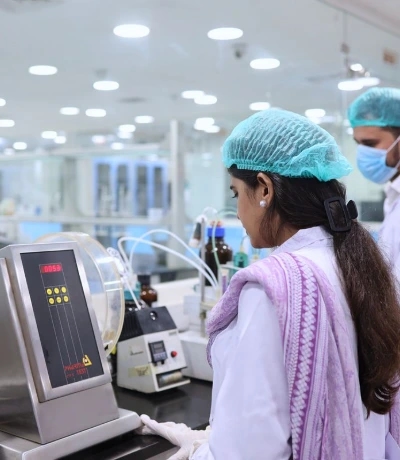
Recognizing the growing need for qualified researchers and technicians in research and development, pharmacy as a career is becoming increasingly desirable. After enrolling, postgraduate candidates receive hands-on training on highly sophisticated instruments such as HPLC, FTIR-ATR, UV-Visible Spectrophotometer, Flame Photometer, and more. In addition, the program prepares students for industry roles through pharmaceutical industrial visits, seminars, workshops, guest sessions by industry experts, and exposure to advanced developments in Pharmaceutical Quality Assurance.
Upon completion of this program, students can pursue careers in Quality Control and Quality Assurance, as well as key roles such as Validation Specialist, regulatory affairs, Pharmacovigilance Associate, GMP/GLP Auditor, and Quality Systems Executive. They may also explore opportunities in specialized fields such as academics, administration, novel formulation development, and other emerging domains within the pharmaceutical industry.
Why pursue M. Pharm - Pharmaceutical Quality Assurance with Indira University?
 Aishwarya Huparikar,
Batch: 2018-2020

My journey from being a student to becoming a faculty member at Indira has been truly fulfilling. The college laid a strong foundation for my academic and professional growth and continues to inspire me as I pursue my PhD. It’s a privilege to now share those same values and teachings with my students.
This incredible journey will continue as Indira evolves into a university, empowering students, shaping bright futures, and leaving a lasting mark on the world. Wishing Indira all the very best for this new chapter!
Madhavi Kapale,
Batch: 2018-20

I’m deeply grateful to SCES’s Indira Pharmacy, Pune. The institute has imparted high-quality education in pharmacy while promoting holistic development, offering numerous opportunities for growth beyond academics.
Sanmati Kulkarni,
Batch: 2023-25

The faculty, staff, and resources at ICP have been top-notch, and I’ve loved my time here. The courses offered at ICP are engaging, challenging, and relevant to the industry. The campus at ICP is vibrant and inclusive, with plenty of opportunities for extracurricular activities.
The facilities and resources at ICP are modern and well-maintained, making it a great place to learn and grow. ICP has provided me with excellent career opportunities and support, including internships and job placements.
Learning Experiences
At Indira University, the Master of Pharmacy (M.Pharm.) program delivers cutting‑edge, research-driven education focused on the safety, efficacy, mechanisms, and disposition of medicines. The curriculum seamlessly integrates rigorous laboratory experimentation, clinical research projects, internships, and industry partnerships, equipping students with specialized skills in quality assurance and pharmaceutical sciences.
The program cultivates analytical thinking, cGMP and strong communication — preparing graduates to make meaningful contributions in areas such as quality control, quality assurance, process validation, regulatory compliance, quality system and risk management.
Graduates emerge as highly capable professionals for key roles in both Quality Control and Quality Assurance, as well as specialized positions such as Validation Specialist, Regulatory Affairs Officer, Pharmacovigilance Associate, GMP/GLP Auditor, and Quality Systems Executive. With its strong commitment to scientific integrity and innovation, the program groom future-ready healthcare professionals and researchers who advance pharmaceutical science through quality and compliance.

Curriculum
| Semester – 1 | ||
|---|---|---|
| Nature of the Course | Course Title | Credits |
| Mandatory | Modern Pharmaceutical Analytical Techniques | 4 |
| Mandatory | Quality Management System | 4 |
| Mandatory | Quality Control and Quality Assurance | 4 |
| Mandatory | Product Development and Technology Transfer | 4 |
| Mandatory | Pharmaceutical Quality Assurance Practical I | 6 |
| Mandatory | Seminar/Assignment | 4 |
| IU | Introduction to Indian Knowledge System | Grade |
| IU | Policy, Governance & Leadership in action | Grade |
| Total | 26 | |
| Semester – 2 | ||
|---|---|---|
| Nature of the Course | Course Title | Credits |
| Mandatory | Hazards and Safety Management | 4 |
| Mandatory | Pharmaceutical Validation | 4 |
| Mandatory | Audits and Regulatory Compliance | 4 |
| Mandatory | Pharmaceutical Manufacturing Technology | 4 |
| Mandatory | Pharmaceutical Quality Assurance Practical II | 6 |
| Mandatory | Seminar/Assignment | 4 |
| IU | Scientific and Technical Writing | Grade |
| IU | Soul | Grade |
| IU | Health Systems, Policy & Community Impact Lab | Grade |
| Total | 26 | |
| Semester – 3 | ||
|---|---|---|
| Nature of the Course | Course Title | Credits |
| Mandatory | Research methodology and Biostatistics | 4 |
| Mandatory | Journal club | 1 |
| Mandatory | Discussion / Presentation (Proposal Presentation) | 2 |
| Mandatory | Research work | 14 |
| IU | Teaching Assistantship / Research Assistantship | Grade |
| IU | Decoding AI | Grade |
| Total | 21 | |
| Semester – 4 | ||
|---|---|---|
| Nature of the Course | Course Title | Credits |
| Mandatory | Journal club | 1 |
| Mandatory | Research work | 16 |
| Mandatory | Discussion/Final Presentation | 3 |
| IU | Essentials of Sustainability | Grade |
| Total | 20 | |
| Course Total | 103 | |
Pedagogy
At the School of Pharmacy, our pedagogy emphasizes interactive and experiential learning to build a strong foundation in pharmaceutical sciences. We integrate hands-on training and project-based learning to enhance practical understanding and critical thinking. ICT tools are actively used to support in-depth learning. Students engage in multidisciplinary research projects that foster innovation and skill development. Guest lectures and seminars by industry experts bridge the gap between academia and industry. In addition, soft skill training is embedded into the curriculum to boost communication, leadership, and overall personality development, ensuring our students are not only technically sound but also professionally competent and industry-ready.
Key Points:
- Interactive learning
- Hands-on training and project-based learning.
- Use of ICT for in-depth learning and understanding
- Multidisciplinary research projects for hands-on training and skill development
- Guest lectures and seminars by industry experts
- Soft skill training for personality enhancement
Industry Immersion
The School of Pharmacy bridges academic learning with real-world experience, offering students exposure to professional environments. It cultivates practical skills, builds industry networks, and enhances job readiness by involving participants in live projects, mentoring, and daily operations within their chosen field.
Mprex Healthcare Pvt Ltd

Mprex Healthcare Pvt Ltd engages with students through knowledge-sharing initiatives. The focus lies on exposing students to the pharmaceutical industry’s operational, regulatory, and marketing frameworks. Experts provide insights into drug development, compliance, and innovation, enriching academic learning with applied industry perspectives.
Clinovi Research Pvt Ltd
Clinovi Research offers structured training and internship programs focused on clinical research and regulatory affairs. These initiatives help students grasp research protocols, ethics, and industry operations. The organization also supports placement efforts, equipping students with professional experience and connections crucial for a successful career start.
Intellectual Property Intellectual Services
This firm emphasizes research, training, and tech-enabled services in the field of intellectual property. Students explore areas like patent analysis, regulatory documentation, and tech integration. The collaboration enhances their understanding of innovation protection, legal frameworks, and strategic development within the pharmaceutical and healthcare industries.
Exposure Trips
As part of their experiential learning, students participated in trips, gaining firsthand insights into media innovations, industry trends, and emerging technologies, bridging academic knowledge with real-world experience in the dynamic field of media.
IIPC (Industry Institute Partnership Cell)
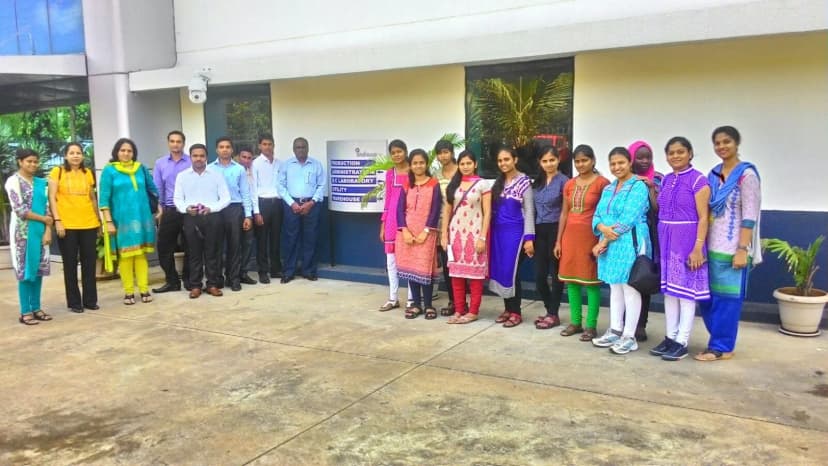
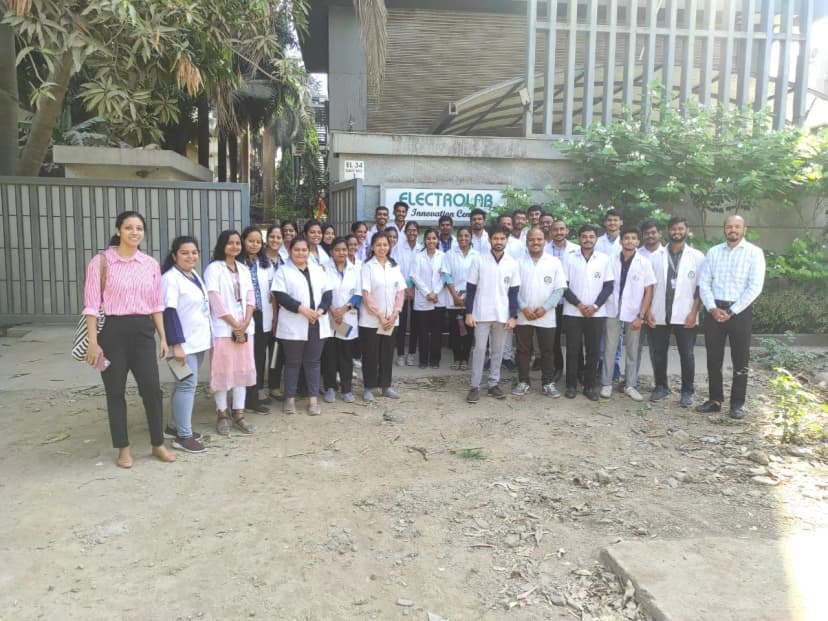
At the School of Pharmacy, we organize regular visits to industrial manufacturing plants to provide students with firsthand insights into Good Manufacturing Practices (GMP). We offer opportunities for collaborative research projects and internships, ensuring hands-on exposure to real-world industry practices. To foster skill development beyond textbooks, our curriculum includes value-added programs and certification courses. Additionally, we have signed MOUs with various industries to ensure students receive the mentorship and guidance essential for their professional growth.
EDC (Entrepreneurship Development Cell)
We provide extensive entrepreneurial exposure through awareness camps, development programs, and skill-building sessions. Guest lectures focused on the pharma business, along with face-to-face interactions with successful entrepreneurs, enrich students’ perspectives. Through workshops, webinars, industrial visits, and personalized mentorship, we foster strong industry-institute collaboration and guide students toward innovative, industry-ready mindsets and entrepreneurial success.
Career Opportunities
M. Pharm in Pharmaceutical Quality Assurance specialists ensure safe and high-quality pharmaceutical products. They check the production, conduct quality tests, and implement regulatory compliance to meet the safety guidelines. Their role is also to audit, inspect, and develop quality assurance systems using their analytical and critical thinking skills. M. Pharm in Pharmaceutical Quality Assurance professionals ensure safe medications for public use.
The career opportunities for the students of M. Pharm in Pharmaceutical Quality Assurance include:
Quality Assurance (QA) Manager
Regulatory Affairs Specialist
Pharmaceutical Auditor
Validation Scientist
Quality Control (QC) Analyst
Pharmacovigilance Officer
Production Manager (Pharmaceuticals and Cosmetics)
Compliance Manager
Clinical Quality Analyst
GMP (Good Manufacturing Practices) Officer
Document Control Specialist
Internal Auditor (GMP/GLP/ISO)
CMC Documentation Specialist (Chemistry, Manufacturing & Controls)
Quality Project Coordinator in CROs
Data Integrity Specialist
Apply for M.Pharm. Pharmaceutical Quality Assurance
The application process at Indira University is designed to be straightforward and transparent. Each stage, from filling out the application form to final submission, is clearly outlined, providing applicants with a seamless and hassle-free experience as they apply to various programs.
Candidate should have passed B. Pharm degree examination of an Indian university establish by law in India from an institution approved by Pharmacy council of India and has scored not less than 55% of maximum marks (Aggregate of Four year of B. Pharm)
Provided that –
– There shall be reservation of seats for the students belonging to the Scheduled Castes, Scheduled Tribes and Other Backward Classes in accordance with the instructions issued by the Central Government/State Government/Union Territory Administration, as the case may be, from time to time.
– For SC/ST candidates the prescribed percentage of marks will be 50% of the maximum marks (aggregate of four years of B. Pharm).
– Every student, selected for admission to postgraduate pharmacy course in any of the pharmacy institution in the country should have obtained Registration with the State Pharmacy Council or should obtain the same within one month from the date of his admission, failing which the admission of the candidate shall be cancelled.
– Students must have B Pharmacy degree from an institution approved by the Pharmacy Council of India under section 12 of the Pharmacy Act.
AND
Obtained Non zero score in Graduates Pharmacy Aptitude Test (GPAT)/ Indira CET (PG)
Our Scholarships
At Indira University, we are committed to ensuring that quality education is within everyone’s reach. To empower students from financially disadvantaged backgrounds, we provide a range of scholarships. These scholarships are designed to ease economic challenges, enabling deserving students to concentrate fully on their studies and build a strong foundation for their future.
M.Pharm in Pharmaceutical Quality Assurance focuses on maintaining drug quality, safety, and regulatory compliance throughout manufacturing and distribution. The program emphasizes quality systems, validation, audits, and global regulatory standards.
Candidate should have passed B. Pharm degree examination of an Indian university established by law in India from an institution approved by Pharmacy council of India and has scored not less than 55% of maximum marks (Aggregate of Four years of B. Pharm) AND Obtained a non-zero score in Graduates Pharmacy Aptitude Test (GPAT)/ Indira CET (PG)
The admission process includes application submission, entrance exam score evaluation, merit-based selection, counseling, and verification of academic and regulatory documents.
Subjects include Quality Management Systems, Pharmaceutical Validation, Stability Testing, Regulatory Guidelines, Modern Analytical Techniques, GMP compliance, and industry-oriented laboratory training
Quality Assurance professionals are in high demand across pharmaceutical manufacturing units, regulatory compliance departments, export-oriented companies, and multinational pharma organizations.
Graduates can expect competitive salaries in QA/QC and compliance roles, with significant growth potential based on experience, regulatory expertise, and organizational scale.
Common roles include QA Manager, Validation Executive, Compliance Officer, Regulatory Auditor, Quality Control Analyst, and Documentation Specialist.
Fees Structure SOP for the Academic Year 2026-2027
| FEES STRUCTURE SOP FOR THE ACADEMIC YEAR 2026-2027 | ||||||||
|---|---|---|---|---|---|---|---|---|
| Sr. No. | Name of the Program | Level | Specialization Options | Duration (Years) | Intake | Tuition Fees (₹) | Development Fees (₹) | Total Fees Per Year (₹) |
| 1 | B. Pharmacy | UG | Pharmaceutical Sciences | 4 Years | 100 | 1,71,000.00 | 19,000.00 | 1,90,000.00 |
| 2 | B. Pharm. Pharm. Tech. MBA | UG | Pharmaceutical Sciences | 1 & 2 Year | 40 | 2,16,000.00 | 24,000.00 | 2,40,000.00 |
| Pharmaceutical Sciences | 3 & 4 Year | 2,34,000.00 | 26,000.00 | 2,60,000.00 | ||||
| PG | Pharma MBA | 5 Years | 4,50,000.00 | 50,000.00 | 5,00,000.00 | |||
| 3 | M. Pharmacy | PG | Pharmaceutics | 2 Years | 15 | 1,80,000.00 | 20,000.00 | 2,00,000.00 |
| Pharmaceutical Quality Assurance | 2 Years | 15 | 1,80,000.00 | 20,000.00 | ||||
| Pharmacology | 2 Years | 15 | 1,80,000.00 | 20,000.00 | ||||
| Regulatory Affairs | 2 Years | 9 | 1,80,000.00 | 20,000.00 | ||||
| Phyto-Pharmacy and Phyto-medicine | 2 Years | 6 | 1,80,000.00 | 20,000.00 | ||||
| 4 | Pharm. D. (Doctor of Pharmacy) | UG + PG | Pharm. D. | 6 Years | 30 | 2,02,500.00 | 22,500.00 | 2,25,000.00 |
| 5 | Master of Business Administration – Pharma | PG | MBA – Pharmaceutical and Healthcare Management | 2 Years | 60 | 4,50,000.00 | 50,000.00 | 5,00,000.00 |
| 6 | Ph.D. – Doctor of Philosophy | Doctoral | Pharmaceutical Sciences | – | – | – | – | 1,00,000.00 |