
MBA – Financial Management
Think beyond balance sheets, grow with global exposure, and lead financial transformation across industries with an MBA in Financial Management at Indira University
Study Mode
Full Time
Duration
2 Years
Commencement Month
July 2026
Assessment
Semester
Location
Indira University, Tathawade, Pune
Overview
The Master of Business Administration (MBA) in Finance is a dynamic program that equips students with a deep and practical understanding of financial management, corporate strategy, and the global business environment. With a blend of analytical training and strategic insight, the course sharpens decision-making skills while reinforcing core concepts like managerial economics, cost management, financial planning, and taxation. Students develop a strong grasp of how businesses function financially, learning to interpret complex financial data, analyze market trends, and design strategies that align with business objectives. Structured to bridge academic knowledge with industry relevance, the program encourages problem-solving through on-the-job training, case studies, and interactive projects.
As Indira School of Business Pune MBA program progresses, they are introduced to specialized areas such as corporate financing, financial risk management, international finance, fintech landscape, and financial laws & regulations. These advanced modules prepare future finance leaders to navigate evolving economic landscapes and contribute meaningfully to organizational growth. By combining strategic vision with hands-on experience, the MBA in Finance sets the stage for impactful, future-forward careers in the financial world.
Why pursue an MBA - Financial Management with Indira University?
Testimonials
 Anu Kaimal,
Senior Analyst, PwC, Batch: 2015-2017

ISBS PGDM has provided me with an incredible platform to actively engage in diverse opportunities that came my way. Whether it was contributing to the cultural committee ‘Udaan’ by organizing and participating in events or taking on the role of a class representative while maintaining a strong focus on academics, my journey at ISBS PGDM has been truly enriching.
This institution has been the catalyst for me breaking out of my shell, enabling me to embrace various experiences that ultimately heightened my confidence and transformed me into a more sociable individual. I firmly believe that effective people management is at the core of success, and my time at Indira has been instrumental in honing this skill.
Ankita Rotangan,
Chief Manager, Affluent Banking - IndusInd Bank, Batch 2017-19

I got placed with HDFC Bank – Trade and Forex Department which turned out to be my dream job role. A niche role which helped me better my knowledge in core finance International Business and Trade situation in the country.
The CDP program gave us wonderful insights on corporate fundamentals and functionalities. I would be forever grateful to ISBS PGDM for shaping me into a Distinctive Professional and a Spirit of Excellence in my corporate journey.
Aman Singh,
Senior Product Manager, Bajaj Finance Ltd, Batch 2017-19

It is the best private B school for PGDM. Our college is student-driven; there are many cells that are run by students like entrepreneur cell, sports committee, placement cell etc. We have amenities like a library, all time fully equipped classrooms and an auditorium.
Our teachers are super cool; they are engaged with students not only in studies but also in events. Their lectures are not boring like those of other teachers. The well-known companies in the industry which come to hire students are Deloitte, ITC, HDFC Bank, Bajaj Finserv, Bajaj Allianz , ICICI Bank ,Aditya Birla Group etc for pool hiring drives.
Learning Experiences
At Indira University, the MBA program goes beyond traditional academics, offering an immersive learning experience tailored to industry needs. The curriculum seamlessly integrates theoretical concepts with practical applications, allowing students to work on live projects, participate in internships, and tackle entrepreneurial challenges.
Under the guidance of experienced faculty and industry experts, students develop both technical and soft skills, equipping them to excel in the dynamic global business environment. We provide a platform for innovation, growth, and learning, helping students build a solid foundation for a successful and fulfilling career.

Curriculum
| Semester-1 | ||
|---|---|---|
| Nature of the Course | Course Title | Credit |
| Mandatory Major | Accounting for Business Decisions | 2 |
| Mandatory Major | OB&HRM | 2 |
| Mandatory Major | Operation & Supply Chain Management | 2 |
| Mandatory Major | Marketing Management | 2 |
| Mandatory Major | Business Analytics Foundation | 2 |
| Mandatory Major | Managerial Economics | 2 |
| Mandatory Major | Legal & Business Environment | 2 |
| Mandatory Major | Aptitude Proficiency I | 1 |
| Mandatory Major | Business Communication Skills | 1 |
| IU | Decoding AI | 1 |
| IU | Indian Knowledge System | 2 |
| IU | SOUL | 1 |
| Generic Elective | Foundation of Organization Management | 1 |
| Generic Elective | Tools for Business Management | |
| Generic Elective | Business Ethics | 1 |
| Generic Elective | Entrepreneurship Development | |
| Total | 22 | |
| Semester-2 | ||
|---|---|---|
| Nature of the Course | Course Title | Credit |
| Research Method | Business Research Methods | 3 |
| Mandatory Major | Financial Management | 2 |
| Mandatory Major | International Business Environment | 2 |
| Mandatory Major | Aptitude Proficiency II | 1 |
| IU | Essentials of Sustainability | 2 |
| Field Project | Field Project (Specialization Core 1) | 3 |
| Mandatory Major | Corporate Finance | 3 |
| Mandatory Major | Direct Taxation | 3 |
| Mandatory Major | Commercial Banking | 3 |
| Mandatory Major | Security Analysis and Portfolio Management | 3 |
| Major Elective | Forex and Treasury Management | 2 |
| Major Elective | Financial Analysis using Excel | |
| Minor | Principles of Insurance | 2 |
| Minor | Indian Financial Institutions and Markets | |
| Total | 29 | |
| Semester-3 | ||
|---|---|---|
| Nature of the Course | Course Title | Credit |
| Mandatory Major | Strategic Management | 3 |
| Mandatory Major | Decision Science | 3 |
| On the Job Training/Internship | On The Job Training (OJT) | 8 |
| Mandatory Major | Investment Banking | 3 |
| Mandatory Major | Project Finance | 3 |
| Major Elective | Financial Risk Management | 2 |
| Major Elective | Equity Research | |
| Minor | Personal Financial Planning and Wealth Management | 3 |
| Minor | Equity Derivatives | 3 |
| Minor | Financial Services | |
| Minor | Retail Banking | 2 |
| Minor | Rural and Micro Finance | |
| Total | 30 | |
| Semester-4 | ||
|---|---|---|
| Nature of the Course | Course Title | Credit |
| Research Project | Research Project | 6 |
| Mandatory Major | Sustainable Finance | 3 |
| Major Elective | Behavioural Finance | 2 |
| Major Elective | Corporate Financial Restructuring | 2 |
| Major Elective | Indirect Taxation | |
| Minor | Fixed Income Securities | 3 |
| Minor | Financial Reporting & Analysis | |
| Minor | Financial Laws | 3 |
| Minor | Strategic Cost Management | |
| Minor | International Finance | 2 |
| Minor | FinTech Landscape and Architecture | |
| Total | 21 | |
Pedagogy
At Indira University, our academic approach is designed to provide students with practical, real-world experience and deep learning. We utilize the Case Study Method and Role Plays to encourage critical thinking and problem-solving. Workshops, Seminars, and Guest Sessions offer insights from industry experts, while Certifications and MOOCs enhance skill development. Live Projects and Internships bridge the gap between theory and practice. Our Flipped Classroom model promotes active learning, and Peer Learning encourages collaboration. We emphasize Research-Based Learning and offer an Immersion Program for hands-on industry exposure, supported by Collaborative Assignments for teamwork skills.
Key Points:
- Case Study Method
- Role Plays and Simulations
- Workshops, Seminars, Guest Sessions, and Industry Speak
- Certifications
- MOOCs
- Live Projects and Internships
- Flipped Classroom
- Peer Learning
- Research-Based Learning
- Immersion Program
- Collaborative Assignments
Industry Immersion
At the School of Business, industry immersion is not just an activity, it’s a commitment to preparing students for the evolving world of work. Through dynamic and hands-on engagements, students gain exposure to real-time business scenarios, market challenges, and strategic decision-making.

Future Leader Development Program

A transformational journey crafted to shape the business leaders of tomorrow! This program is enriched by the presence of industry stalwarts and thought leaders who bring real-world perspectives into the classroom. Through leadership workshops, strategic simulations, and interactive sessions, students explore the essence of executive presence, strategic thinking, and decision-making under pressure. It’s more than a program, it’s a leadership mindset in motion.

Industry and Company Analysis Initiative
This immersive program brings students closer to the real workings of business ecosystems. Through structured company analysis, sector research, and live case evaluations, students gain a practical understanding of industry trends, strategic responses, and business competitiveness, bridging theory with market realities.
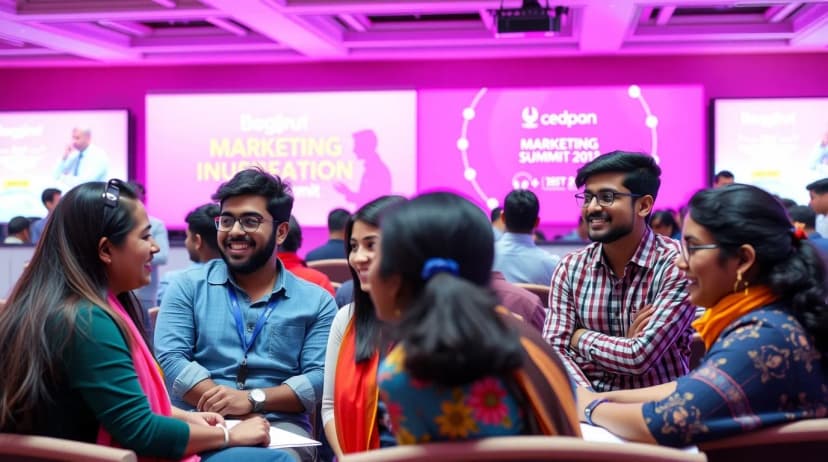
Marketing Excellence Summit
A power-packed event featuring top marketing minds and brand innovators. Students engage in live case discussions, market simulation games, and panel talks that deepen their understanding of customer psychology, digital trends, and brand building.
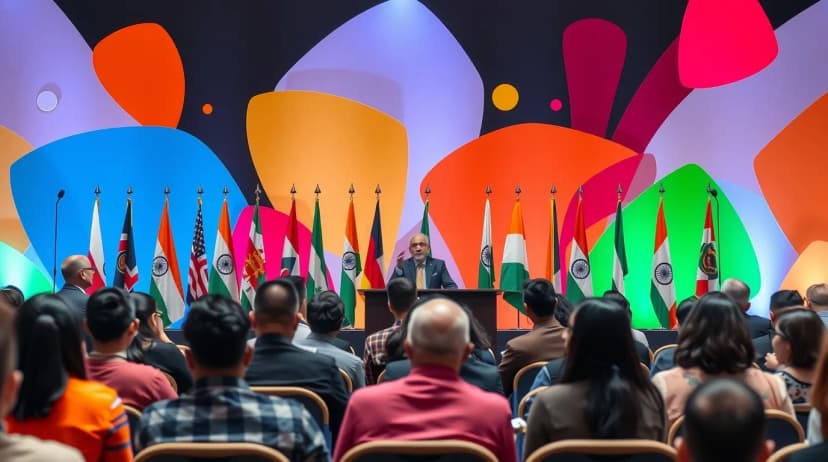
World Education Congress
Participation in the World Education Congress provides our students and faculty with a global lens on higher education trends, innovation in pedagogy, and evolving expectations of industry-academia collaboration.

World HRD Congress
This is where the HR pulse of the world beats louder. From AI in HR to emotional quotient in leadership, students gain access to future-of-work dialogues, emerging people practices, and global talent trends, all under one roof.

HR Excellence Summit
The summit brings together HR leaders, thinkers, and practitioners for meaningful conversations on employee experience, diversity, equity & inclusion, and organizational development, learning directly from the leaders who shape the people powering today’s workplaces.
Exposure Trips
At Indira University, students participate in industrial visits that offer a blend of learning and enjoyment. These excursions take them to prominent industrial sites and heritage locations, providing first-hand exposure to diverse cultures and industries. Such experiences offer valuable insights that enhance their overall academic journey.

International Business Exposure Program (IBEP) – Dubai, UAE
At the School of Business, we believe that real learning often begins where the classroom ends. The International Business Exposure Program (IBEP) to Dubai is designed to give students first-hand experience of global markets, corporate cultures, and cross-cultural business dynamics.
From industry visits to networking with global professionals, IBEP blends academic excellence with cultural exploration. Students gain deep insights into international trade, logistics, innovation hubs, and business strategy, all while experiencing the vibrant economy and culture of the UAE.
Key Highlights:
- Industry tours of leading multinational companies
- Academic sessions hosted by reputed global universities
- Masterclasses with international experts
- Exposure to business practices in logistics, finance, and retail
- Cultural immersion through heritage visits and city exploration
- Networking opportunities in a global business setting
- Integration of classroom learning with real-world business contexts
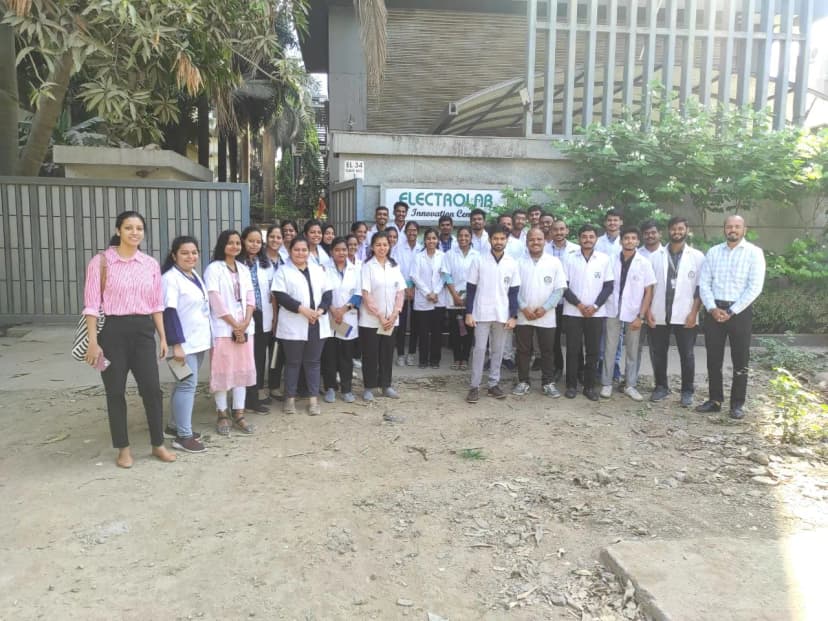
National Business Exposure Program (NBEP) – Goa, India
The National Business Exposure Program in Goa is designed to offer students a rich mix of business insight and cultural immersion within the national context. Set against the vibrant backdrop of Goa, this annual journey merges professional learning with personal exploration. From exclusive industry visits to expert sessions and local networking opportunities, NBEP encourages students to develop critical thinking, communication skills, and business acumen while enjoying the dynamic energy of one of India’s most vibrant destinations.
Key Highlights:
- Exclusive industry visits
- Expert-led insights
- Strategic networking
- Cultural exploration
- Beach leisure time
- Practical business skills
- Memorable adventures
Career Opportunities
MBA Finance professionals manage business financial health by looking after budgeting, investment, financial planning, etc. They analyze financial data, monitor risks, and advise companies on mergers and acquisitions. They develop strategies to cut costs, maximize revenue, and maintain financial stability. MBA Finance professionals play a key role in driving profitability for a business.
The career opportunities for Financial Management MBA students include:
Finance Manager
Investment Banker
Financial Analyst
Portfolio Manager
Risk Manager
Treasury Manager
Corporate Finance Manager
Wealth Manager
Credit Manager
Financial Consultant
Tax Manager
Mergers and Acquisitions Specialist
Compliance Officer
Chief Financial Officer (CFO)
Investment Analyst
Apply for MBA - Financial Management
The application process at Indira University is straightforward and easy to follow. Each step, from filling out the form to final submission, is clearly outlined to provide applicants with a seamless admission experience across all programs.
Minimum 50% aggregate in Graduation (3/4 Year Full-time Bachelor’s Degree) in any stream from a UGC-approved University or equivalent (at least 45% marks, in case of Reserved Class category candidate belonging to Maharashtra State only)
And
A valid, non-zero score in any recognized MBA entrance exam, such as Indira CET (PG), CAT, MAT, XAT, CMAT, ATMA, MAH MBA CET, CUET PG, or any state-level CET.
Our Scholarships
Driven by the belief that education should be inclusive, Indira University provides numerous scholarships for students dealing with economic challenges. Our goal is to eliminate financial obstacles so that deserving students can pursue their academic journeys with confidence and focus entirely on their growth and future success.

An MBA in Financial Management is a postgraduate program that builds expertise in corporate finance, investments, risk analysis, and financial strategy, preparing students for career opportunities in India’s evolving banking and financial services sector.
Yes. If you’re drawn to numbers, markets, and business strategy, then an MBA in Finance is ideal for you. It opens doors to high-growth roles in corporate finance, banking, financial analytics, and investment management.
Graduates have strong MBA in Finance career opportunities, such as financial analyst, investment banker, credit analyst, risk manager, corporate finance executive, portfolio manager, or financial planner.
MBA in Financial Management graduates typically start around ₹6–10 LPA in India, with top roles in investment banking, corporate finance, and financial analytics reaching ₹20–40 LPA as expertise and experience grow.
The best MBA in Financial Management colleges are those with strong industry partnerships, practical finance training, and solid placement support, like Indira University, known for its market-focused finance curriculum and recruiter network.
The MBA in Financial Management scope is expanding rapidly, with opportunities in banking, corporate finance, investments, risk management, fintech, and wealth advisory, driven by India’s growing capital markets.
MBA in Financial Management eligibility includes a 3–4 year bachelor’s degree with at least 50% marks (45% for Maharashtra reserved categories) and a valid non-zero score in exams like Indira CET (PG), CAT, CMAT, MAT, XAT, ATMA, CUET PG, or State CET.