B.Tech in Computer Science & Engineering
Duration
4 Years (8 Semesters)
Degree
B.Tech
Study Mode
Full-Time
Specializations
2 Tracks
Eligibility
10+2 (PCM/PCBM)
Overview
The B.Tech in Computer Science & Engineering at Indira University is a future-focused four-year undergraduate program designed to equip students with strong computational thinking, engineering expertise, and the skills required to thrive in a rapidly evolving digital world. The program blends core engineering principles with advanced computing technologies, creating a learning environment where innovation, problem-solving, and industry readiness go hand in hand.
The curriculum is continuously updated to align with emerging technology trends and industry requirements, covering key domains such as software engineering, algorithms, data structures, cloud computing, artificial intelligence, cybersecurity, machine learning, and intelligent systems. Through a balanced combination of classroom learning, laboratory practice, and real-world applications, students gain a strong foundation in designing, developing, and managing modern technology solutions.
Beyond academics, the program emphasizes experiential learning through live projects, hackathons, coding challenges, industry interactions, research initiatives, internships, and collaborative development environments. Students are encouraged to innovate, experiment, and build technology-driven solutions that address real-world challenges while developing critical thinking, leadership, and teamwork skills.
Whether creating intelligent applications, securing digital infrastructures, developing scalable software systems, or leveraging cloud technologies, students graduate with the technical competence and professional confidence required to succeed in diverse technology careers.
B.Tech CSE Specialized Learning Tracks
Under the School of Engineering at Indira University, the B.Tech in Computer Science & Engineering program offers specialized learning tracks that enable students to gain deeper expertise in emerging technology domains. These tracks are designed to align with current industry demands and future technological advancements, helping learners build specialized knowledge alongside a strong engineering foundation.
- B.Tech CSE – Artificial Intelligence & Data Science
- B.Tech CSE – Cyber Security & Cloud Technology
Why Choose School of Engineering at Indira University
B.Tech CSE Program Outcomes – Engineering the Technologies of Tomorrow
The B.Tech in Computer Science & Engineering at Indira University’s School of Engineering is designed for students who aspire to become creators, innovators, and problem-solvers in the digital age. Combining strong engineering fundamentals with advanced computing technologies, the program prepares learners to design intelligent systems, build scalable applications, and develop technology-driven solutions that address real-world challenges. Through project-based learning, industry collaborations, research opportunities, coding environments, and hands-on engineering experiences, students gain the technical expertise and practical exposure required to excel in the rapidly evolving technology landscape.
Design, Develop & Deploy Intelligent Software Solutions
Students acquire the skills to build robust software applications, intelligent systems, and scalable digital platforms that solve complex business and societal challenges across industries.
Engineer Solutions Through Computational & Analytical Thinking
Learners develop strong problem-solving abilities by applying algorithms, data structures, programming principles, and engineering methodologies to analyze and address real-world technological problems.
Master Emerging Technologies & Modern Development Ecosystems
From cloud platforms and AI frameworks to cybersecurity tools and software development environments, students gain hands-on experience with technologies shaping the future of digital transformation.
Transform Data into Actionable Intelligence
Students learn to collect, analyze, interpret, and leverage data to support informed decision-making, predictive modelling, automation, and intelligent system development across diverse domains.
Build Secure, Ethical & Responsible Technology
Graduates understand the importance of cybersecurity, privacy, ethical AI, and responsible innovation. They are trained to develop technology solutions that are secure, sustainable, and aligned with global professional standards.
B.Tech CSE Fee Structure
Indira University’s School of Engineering offers a transparent fee structure for the B.Tech in Computer Science & Engineering program, providing students access to advanced laboratories, industry-integrated learning, research opportunities, technology certifications, and experiential engineering education.
B.Tech – Computer Science & Engineering
Specializations: Artificial Intelligence & Data Science | Cyber Security & Cloud Technology
Duration: 4 Years
Intake: 120
Fee Structure:
- 1st Year: ₹ 2,50,000
- 2nd Year: ₹ 3,00,000
- 3rd Year: ₹ 2,50,000
- 4th Year: ₹ 2,50,000
Note:
- The fee structure is applicable for the current academic cycle and may be revised as per university regulations.
- Scholarships and financial assistance are available for eligible students based on merit and other applicable criteria.
- Additional charges, if applicable, towards registration, examinations, certifications, industrial visits, and extracurricular activities may apply.
| SEMESTER I | ||||||
|---|---|---|---|---|---|---|
| Course Code | Course Title | Category | L | T | P | Credits |
| 26BCE101T | Applied Mathematics | BSC | 3 | 1 | 0 | 4 |
| 26BCE102T | Physics for Emerging Technologies | BSC | 2 | 0 | 2 | 3 |
| 26BCE103T | Problem Solving and Computational Thinking | ESC | 2 | 0 | 2 | 3 |
| 26BCE104T | Digital Logic and Computer Hardware Basics | ESC | 2 | 0 | 2 | 3 |
| 26BCE105P | Digital Fabrication and Innovation Lab I | ESC | 0 | 0 | 2 | 1 |
| 26BCE113T | Professional Communication Skills I | AEC | 2 | 0 | 0 | 2 |
| UCO2 | Indian Knowledge Systems | IKS | 2 | 0 | 0 | 2 |
| 26BCE120P | NCC/ NSS/Yoga(SOUL)/ Sports/cultural | CC | 0 | 0 | 4 | 2 |
| Total | 20 | |||||
| SEMESTER II | ||||||
|---|---|---|---|---|---|---|
| Course Code | Course Title | Category | L | T | P | Credits |
| 26BCE201T | Computational Linear Algebra and Calculus | BSC | 3 | 1 | 0 | 4 |
| 26BCE202T | Probability and Basic Statistics | BSC | 3 | 0 | 0 | 3 |
| 26BCE203T | Object-Oriented Programming | PCC | 2 | 0 | 2 | 3 |
| 26BCE204T | Computer Organization and Architecture | ESC | 2 | 0 | 2 | 3 |
| 26BCE205T | Fundamentals of Operating Systems | PCC | 2 | 0 | 0 | 2 |
| 26BCE211T | Decoding AI | VSEC | 1 | 0 | 0 | 1 |
| 26BCE206P | Digital Fabrication and Innovation Lab II | ESC | 0 | 0 | 2 | 1 |
| 26BCE213P | Professional Communication Skills II | AEC | 0 | 0 | 2 | 1 |
| 26BCE220P | NCC/ NSS/Yoga(SOUL)/ Sports/cultural | CC | 0 | 0 | 4 | 2 |
| Total | 20 | |||||
| SEMESTER III | ||||||
|---|---|---|---|---|---|---|
| Course Code | Course Title | Category | L | T | P | Credits |
| 26BCE301T | Data Structures and Algorithms | PCC | 3 | 0 | 2 | 4 |
| 26BCE302T | Database Management System | PCC | 3 | 0 | 2 | 4 |
| 26BCE303T | Discrete Mathematics and Graph Theory | BSC | 3 | 0 | 0 | 3 |
| 26BCE304T | Problem Solving using Python | PCC | 2 | 0 | 2 | 3 |
| 26BCE309T 26BCE310T |
AI-DS: Data Engineering for AI
CS-CT: Information Security Principles and Cryptography |
MDM | 2 | 0 | 0 | 2 |
| From Other School Basket | Open Elective I | OE | 2 | 0 | 0 | 2 |
| 26BCE314T | Public Policy and Citizenship | VEC | 1 | 0 | 0 | 1 |
| 26BCE316P | Community Engineering Project I | CEP/FP | 0 | 0 | 4 | 2 |
| 26BCE311P | Data Visualization Studio | VSEC | 0 | 0 | 2 | 1 |
| Total | 22 | |||||
| SEMESTER IV | ||||||
|---|---|---|---|---|---|---|
| Course Code | Course Title | Category | L | T | P | Credits |
| 26BCE401T | Advanced Operating System | PCC | 2 | 0 | 2 | 3 |
| 26BCE402T | Design and Analysis of Algorithms | PCC | 2 | 0 | 2 | 3 |
| 26BCE403T | Software Engineering | PCC | 3 | 0 | 0 | 3 |
| 26BCE411T | Computer Networks | VSEC | 2 | 0 | 0 | 2 |
| 26BCE409T 26BCE410T |
AI-DS: Machine Learning
CS-CT: Network Security |
MDM | 2 | 0 | 2 | 3 |
| From Other School Basket | Open Elective II | OE | 2 | 0 | 0 | 2 |
| 26BCE413T | Technical Writing and Presentation Skills | AEC | 2 | 0 | 0 | 2 |
| 26BCE414T | Essentials of Sustainability | VEC | 1 | 0 | 0 | 1 |
| 26BCE411T | Prompt Engineering Lab | VSEC | 1 | 0 | 2 | 2 |
| 26BCE408T | Digital Entrepreneurship and Innovation | EEMC | 1 | 0 | 0 | 1 |
| Total | 22 | |||||
| SEMESTER V | ||||||
|---|---|---|---|---|---|---|
| Course Code | Course Title | Category | L | T | P | Credits |
| 26BCE501T | Theory of Computation | PCC | 2 | 0 | 0 | 2 |
| 26BCE502T | Cryptography and Information Security | PCC | 2 | 0 | 2 | 3 |
| 26BCE503T | Problem Solving using Advanced python | PCC | 2 | 0 | 2 | 3 |
| 26BCE504T | Web Technologies | PCC | 2 | 0 | 2 | 3 |
| ** | Programme Elective I | PEC | 3 | 0 | 2 | 4 |
| 26BCE509T 26BCE510T |
AI-DS: Advanced Statistics for AI-DS
CS-CT: Cyber Law, Privacy and Digital Ethics |
MDM | 3 | 0 | 2 | 4 |
| From Other School Basket | Open Elective III | OE | 2 | 0 | 0 | 2 |
| 26BCE511P | AI Security and Responsible Technology | VSEC | 0 | 0 | 2 | 1 |
| Total | 22 | |||||
| SEMESTER VI | ||||||
|---|---|---|---|---|---|---|
| Course Code | Course Title | Category | L | T | P | Credits |
| 26BCE601T | Cloud Computing Essentials | PCC | 3 | 0 | 0 | 3 |
| 26BCE602T | Data Warehousing and Data Mining | PCC | 2 | 0 | 2 | 3 |
| 26BCE603T | Advanced Databases | PCC | 1 | 0 | 2 | 2 |
| ** | Programme Elective II | PEC | 3 | 0 | 2 | 4 |
| ** | Programme Elective III | PEC | 3 | 0 | 2 | 4 |
| 26BCE609T 26BCE610T |
AI-DS: Machine Learning and Predictive Analytics
CS-CT: Virtual Infrastructure Security |
MDM | 2 | 0 | 0 | 2 |
| From Other School Basket | Open Elective IV | OE | 2 | 0 | 0 | 2 |
| 26BCE611P | Vibe Coding Studio | VSEC | 0 | 0 | 4 | 2 |
| Total | 22 | |||||
| SEMESTER VII | ||||||
|---|---|---|---|---|---|---|
| Course Code | Course Title | Category | L | T | P | Credits |
| 26BCE701T | MOOCs | PCC | 3 | 0 | 0 | 3 |
| ** | Programme Elective IV | PEC | 3 | 0 | 2 | 4 |
| 26BCE709T | AI-DS: Deep Learning
CS-CT: Security Operations-Threat Intelligence and DevSecOps |
MDM | 2 | 0 | 0 | 2 |
| 26BCE708P | Design Thinking and Product Innovation | EEMC | 0 | 0 | 2 | 1 |
| 26BCE718P | Internship/OJT | Project | 0 | 0 | 24 | 12 |
| Total | 22 | |||||
| SEMESTER VIII | ||||||
|---|---|---|---|---|---|---|
| Course Code | Course Title | Category | L | T | P | Credits |
| 26BCE801P | Major Capstone Project | Project | 0 | 0 | 12 | 6 |
| 26BCE802T | DevOps | PCC | 3 | 0 | 2 | 4 |
| ** | Programme Elective V | PEC | 3 | 0 | 2 | 4 |
| 26BCE809T 26BCE810T |
AI-DS: Emerging Trends in AI and Data Science
CS-CT: Recent Trends in Cyber Security and Cloud Computing |
MDM | 2 | 0 | 4 | 4 |
| 26BCE819T | Research Methodology | RM | 2 | 0 | 0 | 2 |
| 26BCE819P | Research Paper Writing | RM | 2 | 0 | 0 | 2 |
| Total | 22 | |||||
| Basket | Subject Code | Proposed Options |
|---|---|---|
| Programme Elective I (Semester V) | 26BCE521TA | Malware Analysis and Reverse Engineering |
| 26BCE521TB | AI in Energy and Sustainability | |
| 26BCE521TC | DevOps and DevSecOps | |
| Programme Elective II (Semester VI) | 26BCE621TA | Deep Learning for Intelligent Systems |
| 26BCE621TB | Automation and Intelligent Security Systems | |
| 26BCE621TC | Security Monitoring, SIEM and SOC Operations | |
| Programme Elective III (Semester VI) | 26BCE622TA | Human AI Interaction |
| 26BCE622TB | Ethical Hacking and Vulnerability Assessment | |
| 26BCE622TC | AI in Healthcare Informatics | |
| Programme Elective IV (Semester VII) | 26BCE721TA | Augmented and Virtual Reality Systems |
| 26BCE721TB | AI Digital Forensics and Incident Response | |
| 26BCE721TC | Precision Agriculture | |
| Programme Elective V (Semester VIII) | 26BCE821TA | IoT Data Analytics and Edge Computing |
| 26BCE821TB | Smart Connected Systems and Cyber-Physical Security | |
| 26BCE821TC | Remote sensing and GIS |
Pedagogy
The B.Tech in Computer Science & Engineering at Indira University’s School of Engineering follows an industry-aligned pedagogy that combines engineering fundamentals with emerging technologies, innovation, and experiential learning. Students engage with real-world engineering challenges through project-based coursework, innovation labs, coding environments, design thinking exercises, research initiatives, and technology-driven problem-solving. The curriculum encourages learners to apply theoretical concepts through practical implementation while developing critical thinking, analytical abilities, and professional competencies required in today’s technology ecosystem.
From artificial intelligence and cloud computing to cybersecurity, software engineering, and data-driven applications, students learn through immersive experiences that mirror real industry practices. Technology-enabled learning environments, collaborative projects, internships, and continuous industry interaction ensure graduates are prepared to innovate, adapt, and lead in a rapidly evolving digital world.
Key Points:
- Collaborative Learning
- Project-Based Learning
- Experiential & Engineering Lab-Based Learning
- Design Thinking & Innovation-Centric Learning
- Technology-Enhanced Learning
- Research-Oriented Learning
- Industry-Integrated Assignments
- Hackathons, Coding Challenges & Innovation Sprints
- Internship & On-the-Job Training Exposure
- Peer-to-Peer Learning & Technical Communities
Facilities
Indira University’s School of Engineering provides a modern learning ecosystem designed to foster innovation, experimentation, technical excellence, and collaborative growth. The infrastructure supports students throughout their engineering journey, enabling them to transform ideas into practical solutions while gaining hands-on experience with industry-relevant technologies.
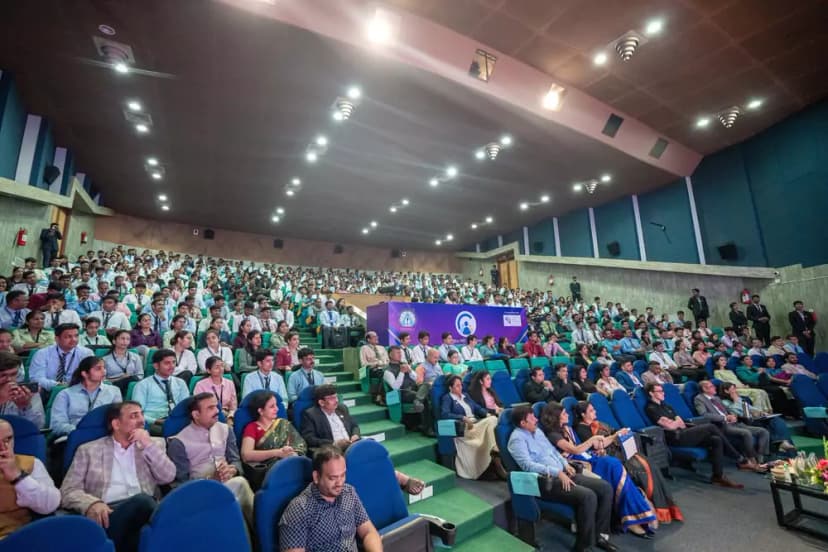
Auditorium

A state-of-the-art auditorium that hosts expert lectures, technical conferences, innovation showcases, industry conclaves, and leadership interactions, helping students stay connected with evolving engineering and technology trends.
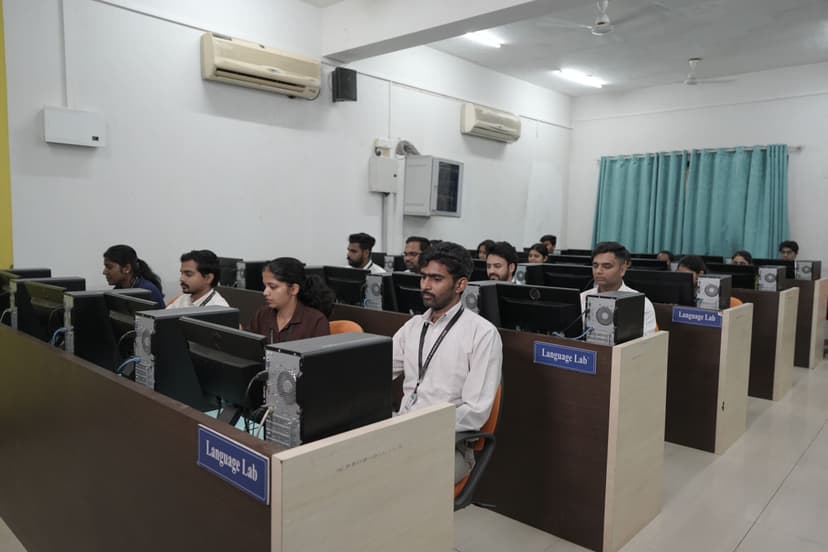
Advanced Computer Labs
High-performance computing laboratories equipped with modern development environments, programming tools, software platforms, and specialized resources required for software development, AI applications, cloud technologies, and engineering projects.

Innovation & Digital Fabrication Labs
Dedicated spaces where students explore prototyping, design thinking, product development, and innovation-led problem-solving through hands-on experimentation and interdisciplinary project work.
Artificial Intelligence & Data Science Labs
Specialized facilities that enable students to work with machine learning frameworks, data analytics platforms, predictive modelling tools, and intelligent systems, supporting advanced learning and research in AI and Data Science.

Cyber Security & Cloud Technology Labs
A dedicated environment for cybersecurity simulations, network security practices, cloud deployment, ethical hacking exercises, digital forensics, and secure system design using industry-relevant tools and technologies.
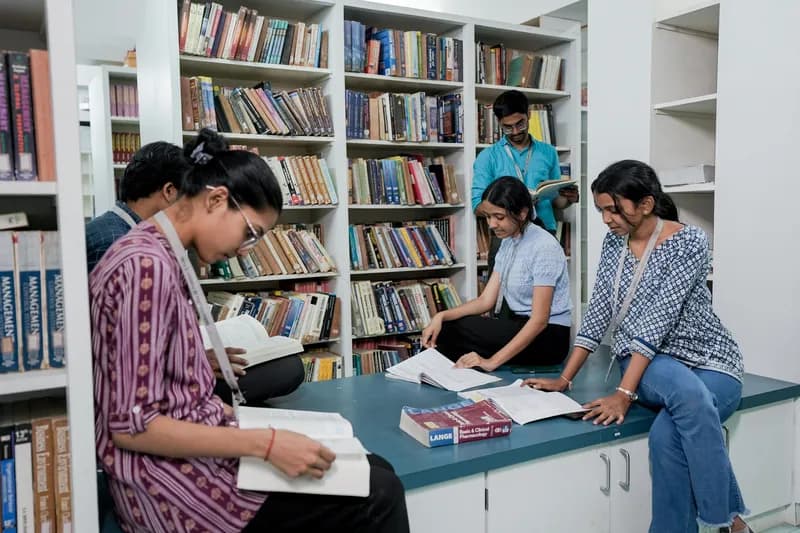
Library & Digital Knowledge Centre
A comprehensive learning resource centre offering access to books, journals, technical publications, research databases, e-learning platforms, and digital content that support academic excellence, innovation, and lifelong learning.
Industry Immersion
At Indira University’s School of Engineering, industry immersion is embedded within the learning journey to ensure students graduate with practical experience and professional confidence. Through internships, industry collaborations, expert mentoring, live projects, innovation challenges, and technology workshops, learners gain direct exposure to real-world engineering environments and emerging industry practices.
Industry Internships & On-the-Job Training
Students undertake structured internships and on-the-job training opportunities that provide hands-on exposure to professional work environments, enabling them to apply classroom concepts to real business and engineering challenges.

Industry Expert Mentorship
Regular interactions with technology leaders, engineers, entrepreneurs, and domain specialists help students understand current industry trends, career pathways, and practical problem-solving approaches.
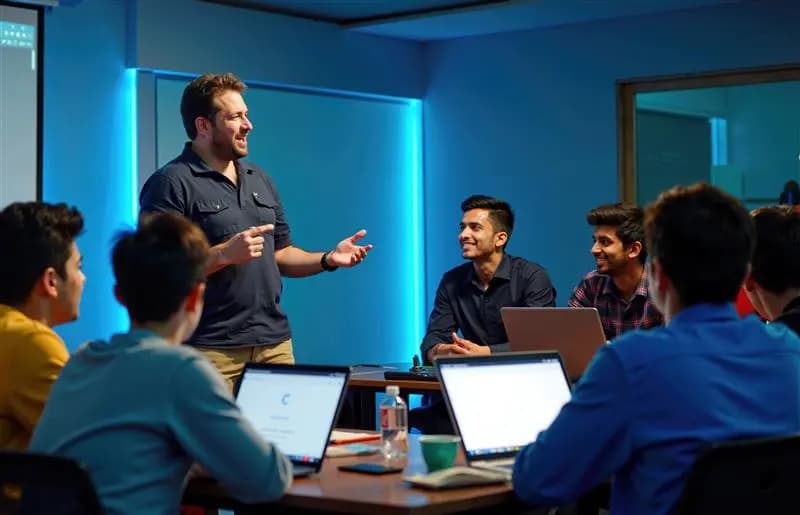
Live Projects & Product Development
Students collaborate on real-world projects that involve designing, building, testing, and deploying technology solutions while gaining valuable experience in teamwork, project management, and innovation.

Innovation & Entrepreneurship Initiatives
Through courses in digital entrepreneurship, innovation management, and product development, students are encouraged to transform ideas into impactful solutions and explore entrepreneurial opportunities.

Industry Readiness Programs
Focused training in technical skills, communication, presentation, teamwork, leadership, and professional conduct ensures graduates are equipped to meet the expectations of modern engineering organizations.
Exposure Trips
At Indira University, engineering education extends beyond classrooms and laboratories through exposure visits, innovation tours, research engagements, and academic collaborations. These experiences help students understand how engineering and technology are transforming industries, societies, and global economies.
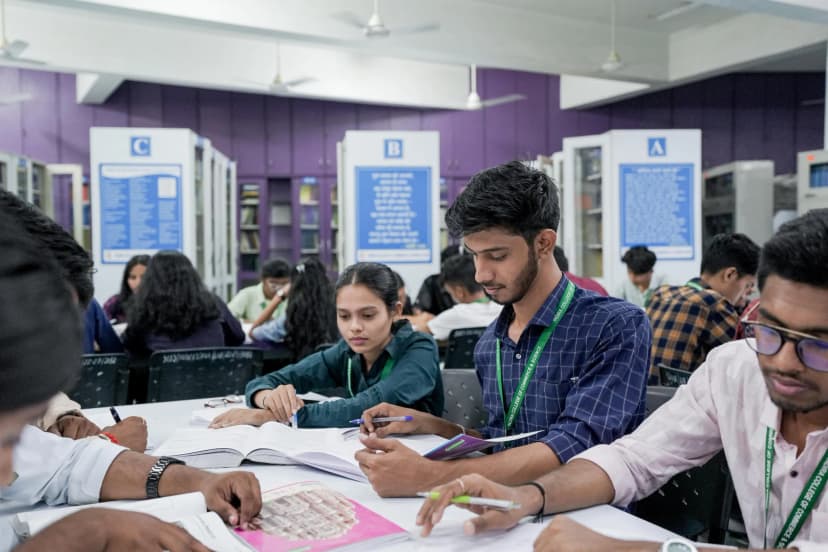
Technology & Industry Visits
Students visit leading technology organizations, innovation centres, manufacturing facilities, and engineering enterprises to gain firsthand exposure to industry operations, digital transformation initiatives, and emerging technologies.

Innovation & Research Engagements
Participation in technical competitions, research forums, engineering exhibitions, and innovation challenges allows students to showcase ideas, build technical confidence, and develop a research-oriented mindset.

Academic & Global Collaborations
Industry-academic partnerships, knowledge exchange initiatives, and collaborative learning opportunities provide students with exposure to global perspectives, advanced technologies, and future-focused engineering practices.

Design Thinking & Product Innovation Experiences
Workshops, innovation bootcamps, and product development initiatives help students strengthen creativity, problem-solving capabilities, and user-centric design skills while working on practical engineering solutions.

Sustainability & Community Engineering Initiatives
Through community engineering projects and sustainability-focused activities, students apply technology and engineering principles to solve societal challenges while developing a sense of responsibility and impact-driven innovation.
B.Tech CSE Scope and Career Opportunities
Graduates of the B.Tech in Computer Science & Engineering program at Indira University’s School of Engineering enter a rapidly expanding technology ecosystem where innovation, intelligence, and digital transformation are shaping the future. Equipped with strong engineering fundamentals, advanced computing skills, and specialized knowledge in Artificial Intelligence & Data Science or Cyber Security & Cloud Technology, students are prepared to solve complex challenges and build impactful technology solutions.
Through industry-aligned learning, hands-on projects, internships, and exposure to emerging technologies, graduates develop the technical expertise, analytical mindset, and professional adaptability required to excel across diverse sectors, including software development, artificial intelligence, cloud computing, cybersecurity, data engineering, product innovation, and digital transformation.
Students can also pursue higher studies and specialized certifications in areas such as Artificial Intelligence, Data Science, Cyber Security, Cloud Computing, Robotics, Advanced Computing, and emerging technology domains, opening pathways to leadership, research, and innovation-driven careers.
Career opportunities include:
Software Engineer
Full Stack Developer
Artificial Intelligence Engineer
Machine Learning Engineer
Data Scientist
Data Engineer
Cloud Engineer
Cloud Solutions Architect
Cyber Security Analyst
Security Operations Center (SOC) Analyst
Ethical Hacker
Digital Forensics Specialist
DevOps Engineer
Site Reliability Engineer (SRE)
Network Security Engineer
Database Administrator
Systems Engineer
Software Quality Assurance Engineer
Business Intelligence Analyst
Product Engineer
IT Consultant
Research Associate
Technology Entrepreneur
Solution Architect
Passed 10+2 (HSC) with Physics, Chemistry & Mathematics (PCM) or Physics, Chemistry & Biology (PCB)
AND
Minimum 45% aggregate in qualifying examination (40% for reserved categories)
AND
Valid score in MHT-CET / JEE Main / SAT / IUCET
Indira University’s School of Engineering is backed by 32 years of legacy of the Indira Group of Institutes. It offers a future-focused B.Tech in Computer Science & Engineering program that combines strong engineering fundamentals with emerging technologies such as Artificial Intelligence, Data Science, Cyber Security, and Cloud Computing. The program emphasizes experiential learning, industry exposure, innovation, research, and skill development to prepare students for successful technology careers.
The B.Tech Computer Science & Engineering program offers the following specialization tracks:
- Artificial Intelligence & Data Science (AI & DS)
- Cyber Security & Cloud Technology
These specializations enable students to build expertise in high-growth technology domains while developing a strong foundation in core computer science and engineering principles.
Graduates can pursue diverse career opportunities across the technology sector, including roles such as:
- Software Engineer
- Full Stack Developer
- AI & Machine Learning Engineer
- Data Scientist
- Cloud Engineer
- Cyber Security Analyst
- DevOps Engineer
- Network Security Engineer
- Systems Engineer
- Product Engineer
- Technology Consultant
Students may also pursue higher studies, research, professional certifications, or entrepreneurial ventures in emerging technology domains.
Yes. The program integrates practical learning through engineering labs, innovation projects, coding challenges, internships, industry interactions, research initiatives, community engineering projects, and experiential learning activities. Students also gain exposure to emerging technologies through specialized labs, workshops, industry mentorship, and project-based learning experiences.
Admission to the B.Tech Computer Science & Engineering program is conducted as per the eligibility criteria and admission guidelines prescribed by Indira University. Interested candidates can apply online, submit the required academic documents, and complete the admission process through the university’s admissions department.